“The Only One Who Never Abandons Us Is God” / For Life magazine no 15, 2026
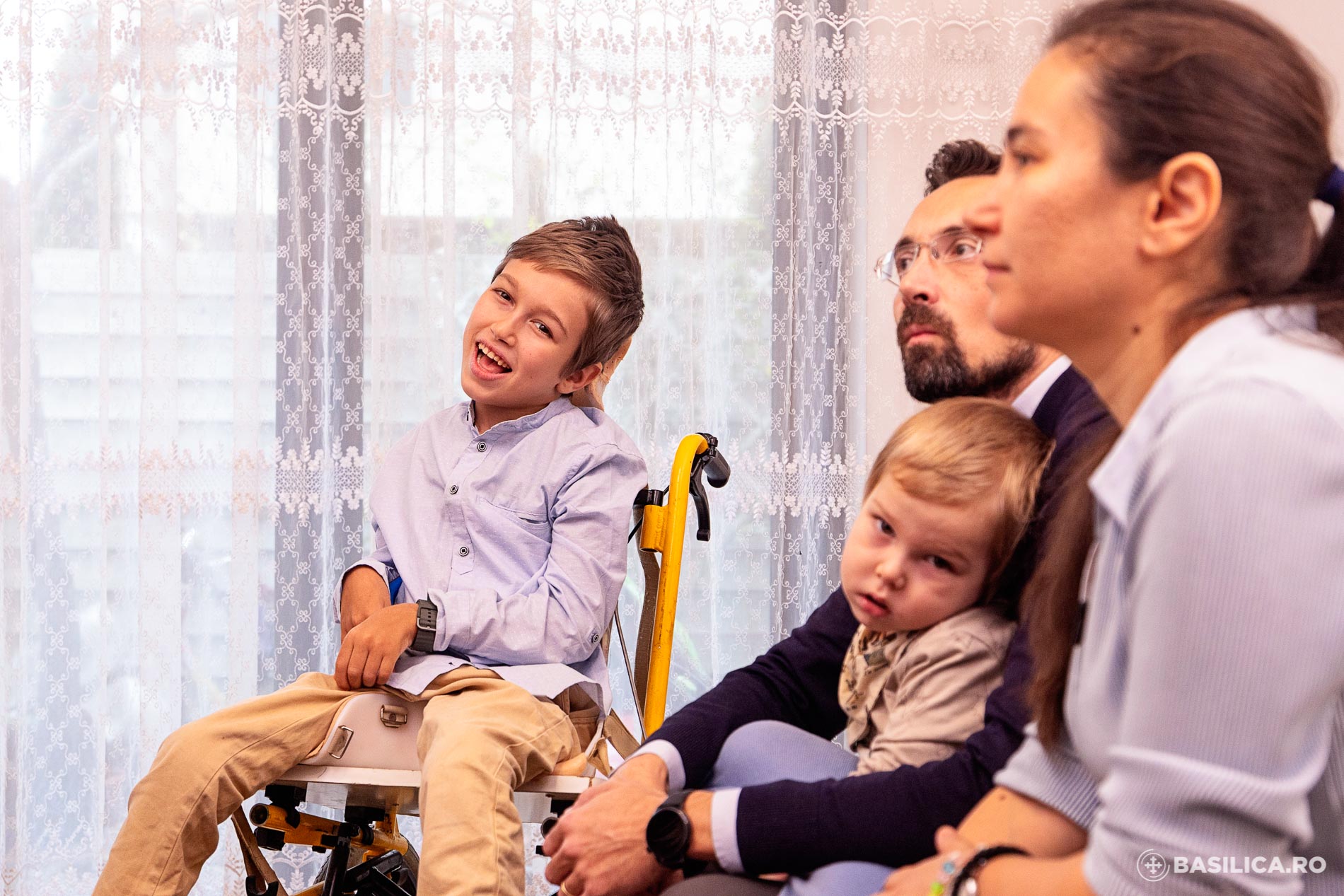
Some families live daily what for others is only a news item or a statistic. Six children, two diagnosed with a severe genetic disease, therapies, fundraising campaigns, short nights, and much prayer. In the context of the theme of the 2026 March for Life – “Solidarity for Both” – we spoke with a mother for whom solidarity is not a slogan, but a lived experience—both when it was present and when it was absent.
You are the mother of six children, and two of them are facing a serious illness. What does an ordinary day in your family look like, in concrete terms?
In the evening, together with the children, we prepare their clothes for the next day. My husband takes them to school in the morning and picks them up at noon, and, on some days, I help as well.
At home, I stay with Matei (the 11-month-old baby), Nicolae (who attends school in the afternoon), and Teodor. We also have help—a lady who has known us for a long time and loves the children very much. Twice a week, I take Teodor to therapy in the morning.
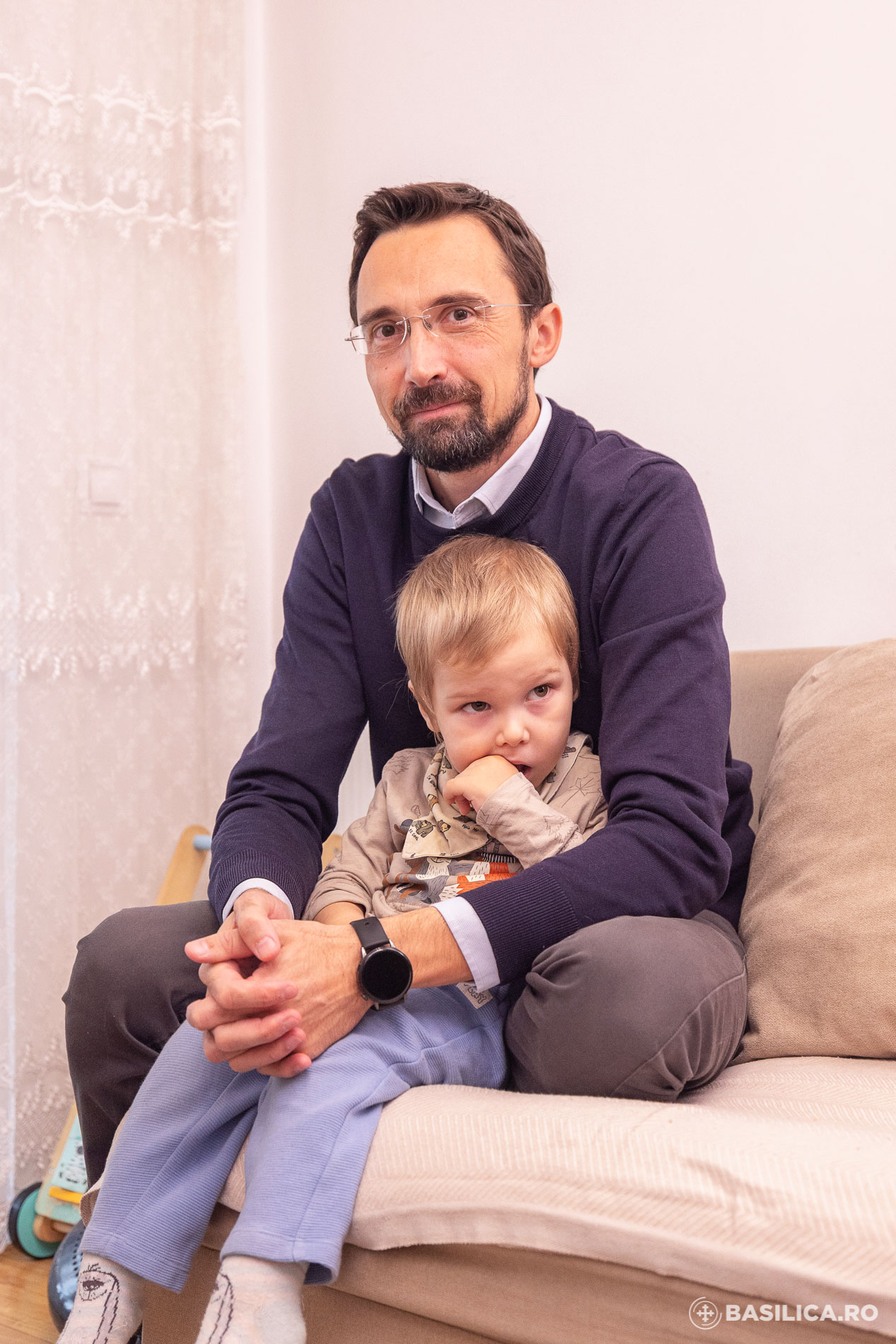
Every evening, from Monday to Friday, my husband, Cristi, takes Ioan and Teodor to physical therapy. The day ends late, after all the children go to bed, and I remain to tidy up the kitchen and take care of the activities related to the campaign we currently have underway.
What reactions do you encounter toward you and toward your children with disabilities?
I noticed that some people had a more distant attitude toward me when I was with Ioan, compared to moments when I was not with him. The image of a child with a disability can be difficult for others to handle, and sometimes people withdraw without offering support, perhaps also out of fear of being emotionally affected.
On the other hand, this distance was nonetheless civilized: no hurtful things were said; they simply did not step in. There were, however, beautiful exceptions—true friends who remained by our side and supported us in concrete ways.

What would parents at the beginning of a similar journey—who feel alone, overwhelmed, or perhaps even judged—need to hear?
We are still in this struggle, and things are recent: ten months ago, we learned that Teodor is also ill. The only One Who never abandons us is God.
It is important for parents to value the support of friends and family who remain by their side and to seek medical solutions if they exist. If they do not exist, they must accept reality and learn to live with it. It is easy to say and very difficult to accomplish.
The theme of the 2026 March for Life is “Solidarity for Both”—mother and child. When did you feel solidarity the most, and where is it lacking today?
I felt solidarity especially through the support of people, many of them strangers, who stood by us in the campaign we initiated. In daily life, there are empathetic people, but many avoid what affects their physical or emotional comfort. I believe, however, that if people were more aware, they would be willing to help people with disabilities. It is their hearts that we hope to reach.
What would you say to those who do not know the reality of a family with children with disabilities, in order to encourage greater understanding and respect?
That they are fortunate. That health is a gift and that anyone can become ill. The last thing that could help a family with children with disabilities is to be judged.
I believe that good people are strong people and that goodness is a strength. It is easy to harm, but to do good, you must make an effort. It takes strength to stand beside the sick, to overcome the pain of seeing a child suffer, and to think about how difficult it is for the parents and for that child who cannot walk. Then you must have patience: to stay next to him, to grow tired lifting him, or pushing his wheelchair.
All these things can be overcome through love: love for these children, love for God, and by seeing in every person who suffers the image of God. I believe, as Balzac also said, that a person in suffering must be respected precisely because he suffers and because he carries such a burden.
Your support can make a difference for Ioan and Teodor
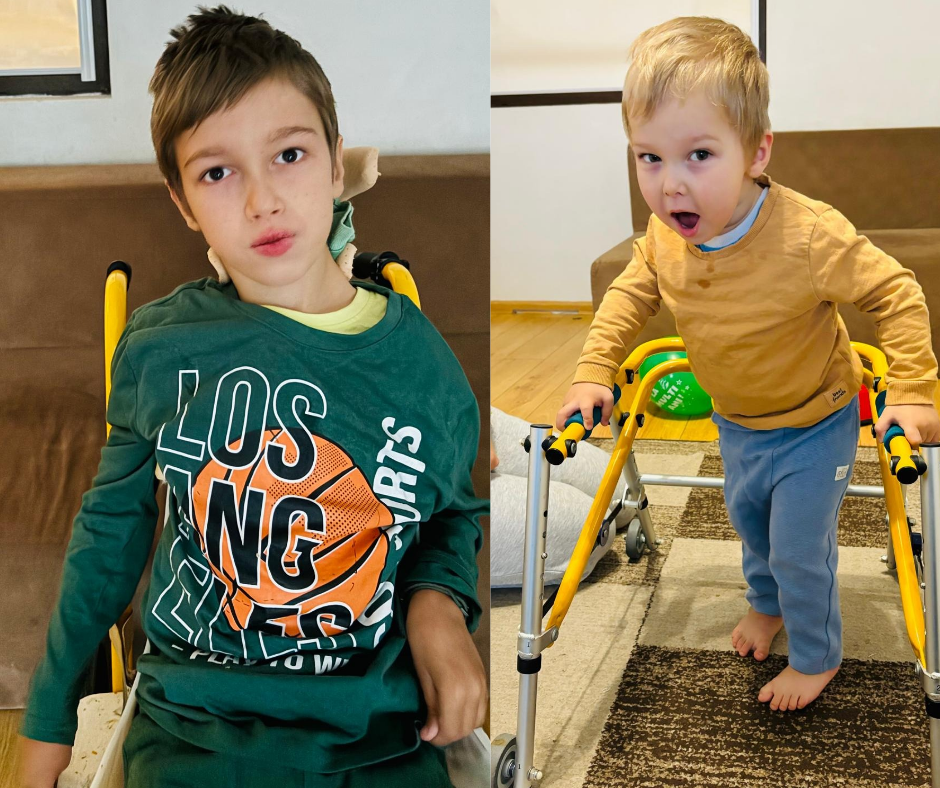
The Rusu family is currently conducting a fundraising campaign for the treatment of Ioan and Teodor. The two children can be saved if they receive a genetic treatment worth approximately 2 million dollars.
At present, approximately 800,000 dollars are still needed, which must be raised as soon as possible, to stop the progression of the disease and offer them a chance at recovery, with Teodor even having the possibility of a complete recovery.
Donate
“Ioan si Teodor CMT4J” Association
Account no.: RO23 RNCB 0068 1831 7093 0001
SWIFT Code: RNCBROBU
Revolut
Beneficiary: Valentina Rusu
Account no.: RO40 REVO 0000 1518 9158 4434
BIC/SWIFT Code: REVOROBB
@rusuvalentina1987
Phone no. for the “Ioan si Teodor CMT4J” Association: +40 (0)774 923 591
Related Posts
-
 My daughter has asked me many times why she doesn’t have a sister or a brother / “For Life” magazine – Spring 2016
-
 Read here online “For Life” magazine no. 5, “Pro-Life, Pro-Family, Pro-Woman” – Spring 2016
-
 Dallas, Texas: Alexandra Nadane receives Heartbeat International’s “Heart of Future” Award for promoting pregnancy crisis centers in Romania and EU
-
 Romanian Patriarchate’s Representation to EU: Matić Report amplifies rifts in today’s Europe