Life Statistics / For Life magazine no 15, 2026

Underreporting of Abortion in Romania: High Numbers on Paper, Even Higher in Reality
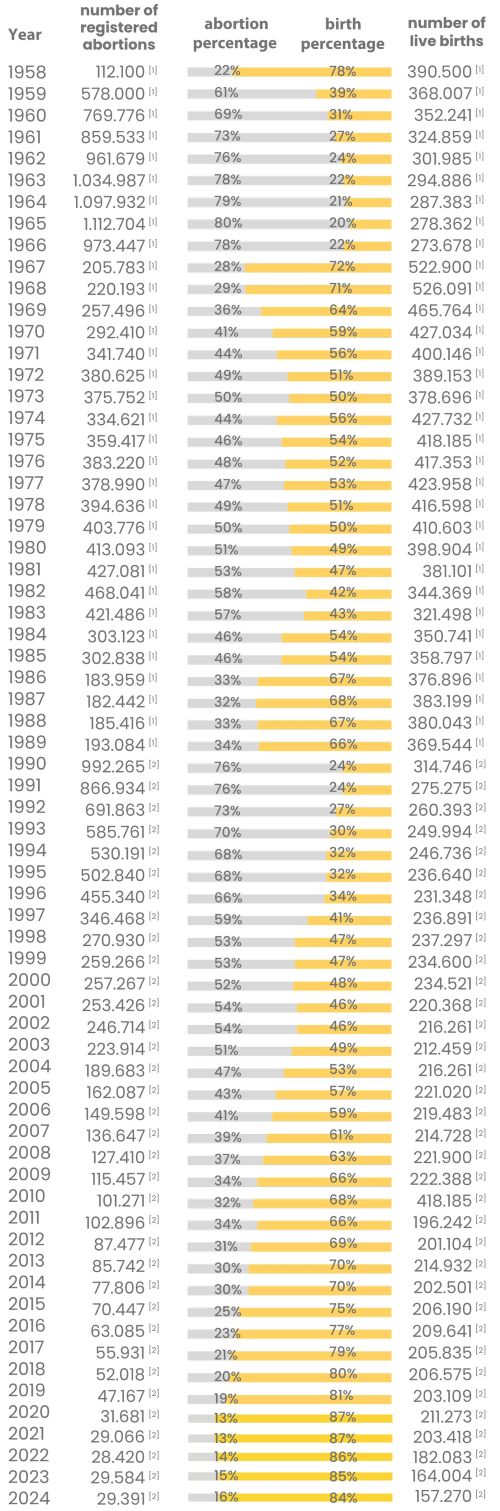
In Romania, between 1958 and 2023, state institutions recorded 23,046,154 legal abortions. This number does not include abortions performed in private clinics and in some state hospitals that do not report data, chemical abortions, abortions performed by Romanians working abroad (most of whom are of childbearing age), illegal abortions, or situations where abortions are performed on demand but are recorded as curettages for pregnancies that have stopped developing. Recording these in official statistics would probably double the official number of abortions.
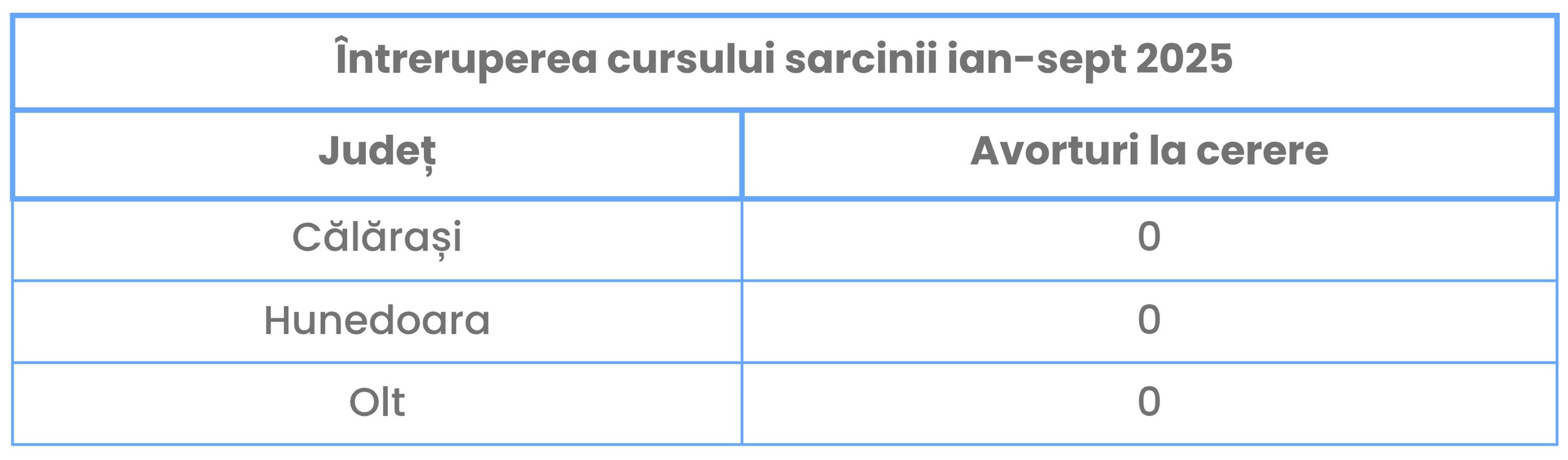
The phenomenon of underreporting is not a thing of the past, but continues today. For example, in the first nine months of 2025 (January–September), zero abortions on demand were officially reported in the counties of Călărași, Hunedoara, and Olt, which raises serious questions about the accuracy of the statistical data. [1]
Since 1958, when it was legalized, and up to the present day, the incidence of abortion has been higher than in Western countries, regardless of Romania’s political regime or the legal status of abortion!
- 7,521,100 abortions during the liberalization period 1958–1966 (9 years) [2];
- 7,298,402 legal abortions during the period of restriction 1967–1989 (24 years) [2];
- 8,226,652 abortions during the period of liberalization 1990–2023 (34 years) [3].
After Russia, Romania ranks second in the world in terms of the ratio of abortions to the existing population.
In Romania, the national average is three abortions in a woman’s lifetime, while in Western countries it is at most one abortion. In 1965, Romania held the record for the highest abortion rate per 1,000 women in the history of abortion internationally, with 252 abortions per 1,000 women. That year, 1,112,704 legal abortions were performed. [4]
Sources
[1] INSP, National Center for Public Health Statistics, Newsletter – Key indicators of health status – 9 months of 2025 compared to 9 months of 2024, online at https://insp.gov.ro/download/buletin-informativ-principalii-indicatori-ai-cunoasterii-starii-de-sanatate-9-luni-2025-comparativ-cu-9-luni-2024/
[2] Abortion statistics and other data—Johnston’s Archive, „Historical abortion statistics, Romania”, July 2023, made by Wm. Robert Johnston, online at http://www.johnstonsarchive.net/policy/abortion/ab-romania.html
[3] National Institute of Statistics, 2024, Tempo-Online database, Population, online at http://statistici.insse.ro:8077/tempo-online/#/pages/tables/insse-table; the data are underreported: they do not include the number of abortions performed in private clinics or the number of chemical abortions.
[4] Stanley K. Henshaw Susheela Singh, Taylor Haas, „The Incidence of Abortion Worldwide”, The Guttmacher Institute, online at https://www.guttmacher.org/journals/ipsrh/1999/01/incidence-abortion-worldwide#:~:text=The%20highest%20abortion%20rate%20ever,as%20termination%20of%20known%20pregnancies.
IVF: How many lives are actually born?
In recent decades, In Vitro Fertilization (IVF) has been presented as a modern solution to infertility. Less discussed, however, is the human cost of these procedures: the very large number of embryos created that never make it to birth.
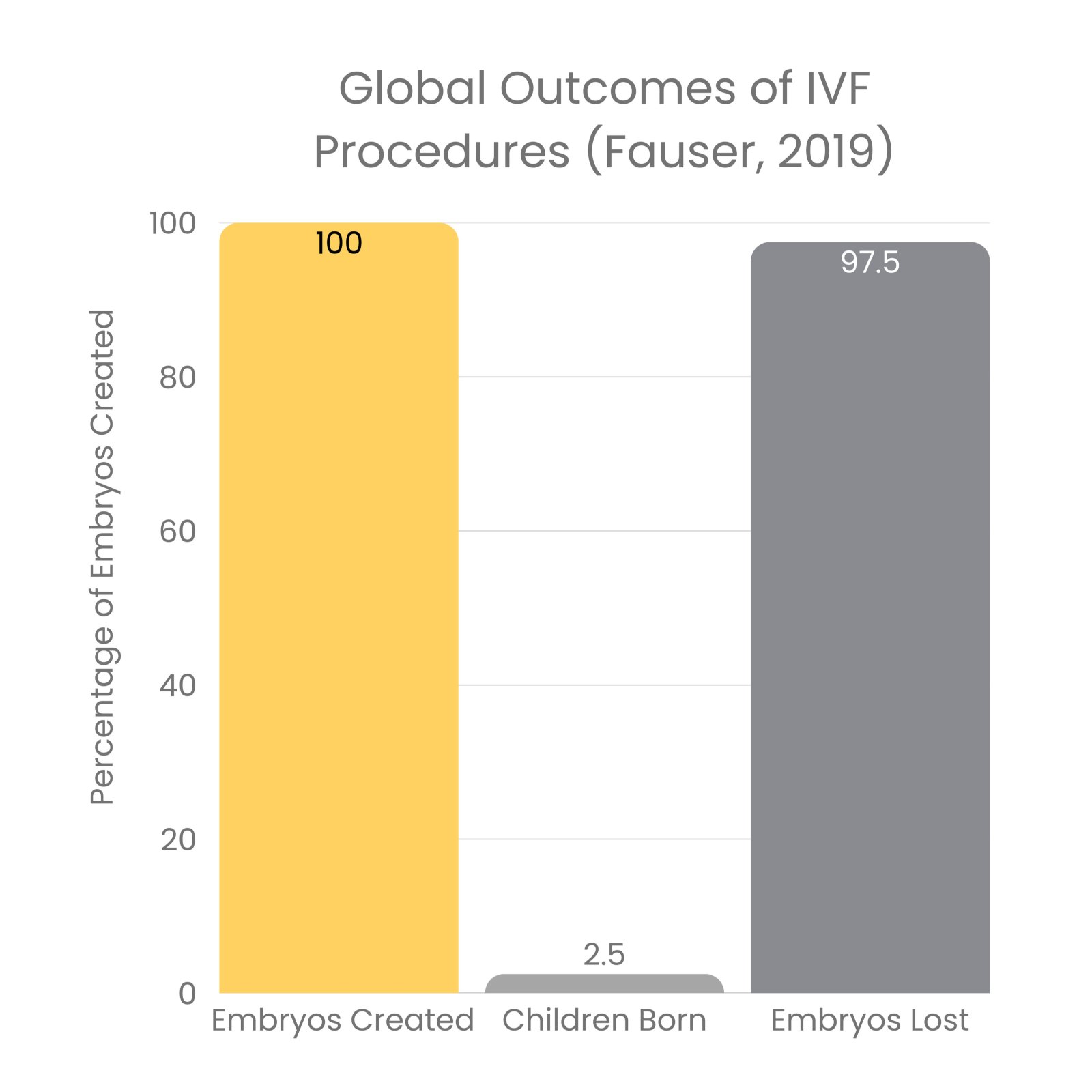
A meta-analysis editorial published in 2019 by Professor Bart Fauser, a gynecologist at Utrecht University (Netherlands), in the journal Reproductive Biomedicine Online, shows that globally, approximately 2.5 million IVF procedures were performed annually, resulting in around 500,000 births.
Given that, on average, approximately 7–8 embryos were created in an IVF cycle, it follows that between 17.5 and 20 million embryos were conceived annually. Of these, only about 2.5–3% were born.
This means that between 96% and 97.5% of embryos created through IVF procedures lost their lives before birth. Some died naturally during the implantation process, others were eliminated through genetic selection, and others were considered “surplus” and destroyed or frozen indefinitely.
These data raise a fundamental question: can a technology that involves the systematic loss of most of the lives it creates really be considered humane?
In the context of Romania, also discussing public funding for IVF procedures, without clear protection for embryos, this reality cannot be ignored. Support for the family cannot be separated from respect for human life that starts from its very first moment.
Source
Fauser, B. C. J. M. (2019). Towards the global coverage of a unified registry of IVF outcomes. Reproductive Biomedicine Online, online at https://www.rbmojournal.com/article/S1472-6483%2818%2930598-4/fulltext
RoLifeNews, FIV: milioane de embrioni își pierd viața în fiecare an, online at: https://rolifenews.ro/blog/2025/06/07/fiv-milioane-de-embrioni-isi-pierd-viata-in-fiecare-an/
Related Posts
-
 Full VIDEO (Romanian). The First Edition of the “Babies Go to the European Parliament” Event at the European Parliament
-
 Romania: A list of helpcenters for women in pregnancy crisis, mothers and families / For Life magazine no 10, Spring 2021
-
 Дело жизни румынского пастыря Николае Тэнасе
-
 The pro-life future starts now: The March for Life 2023 in Romania and Moldova is part of the Month for Life