Romanian journalist on the decline of a civilization that restricts freedom to shield abortion from an unspoken prayer
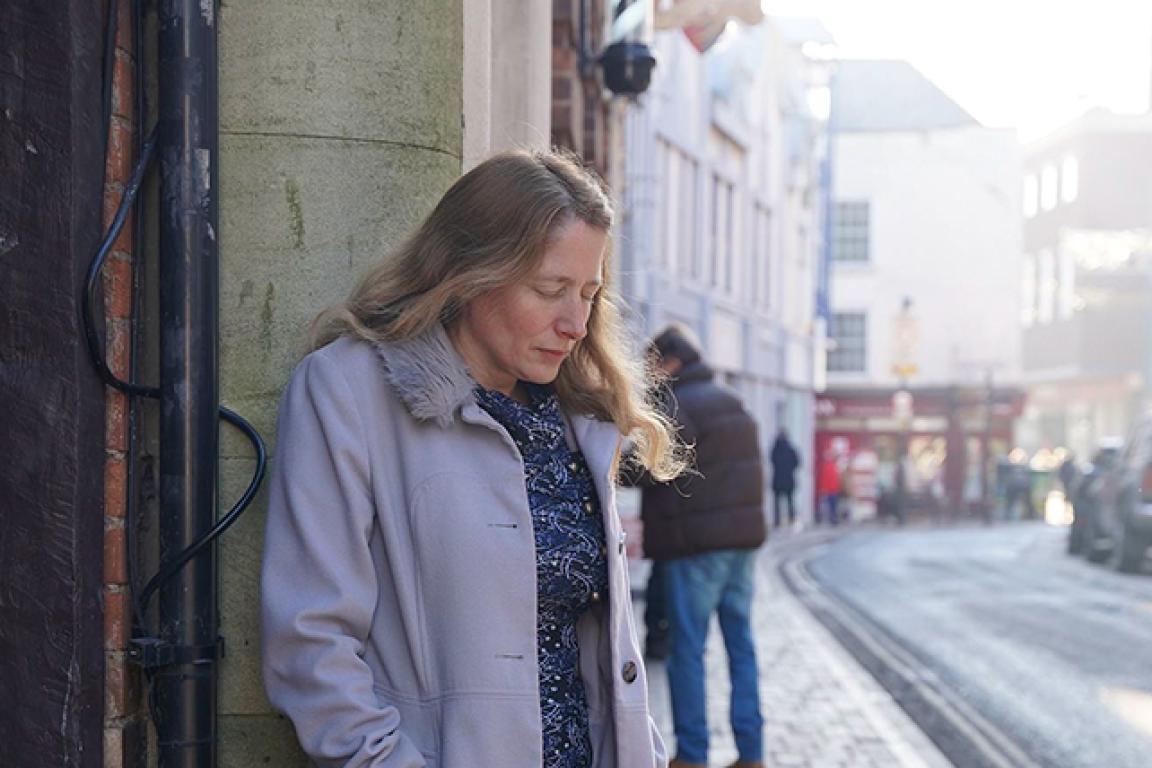
Florin Pușcaș, a Romanian journalist, published an opinion piece about the case of Isabel Vaughan-Spruce, co-chair of the March for Life in the United Kingdom. She is being dragged into criminal proceedings for the alleged offense of praying silently in a public place, following the introduction of legislation intended to protect abortion clinics from vandalism and microaggressions.
The Decline of a Civilization: From King George VI to Isabel Vaughan-Spruce
In May 1940, Great Britain faced one of the gravest threats in its history. Nazi Germany was sweeping rapidly across Europe, France was collapsing, and hundreds of thousands of British and Allied troops were surrounded in northern France near the port of Dunkirk. The prospect of the British Army’s destruction had become all too real. Such a catastrophe could have jeopardized the United Kingdom’s ability to continue the war against Hitler.
During those dramatic days, King George VI made a gesture that today seems to belong to another world. On May 24, 1940, the monarch addressed the nation and called on the British people to pray, proclaiming Sunday, May 26, a national day of prayer.
“At this fateful hour, we turn, as our fathers before us have turned in all times of trial, to God most high,” the King declared.
The King urged the British people to entrust their cause to God and ask Him for help in defending what they considered right and good.
On Sunday, May 26, churches filled with worshipers. At Westminster Abbey, King George VI and Queen Elizabeth attended a service alongside Prime Minister Winston Churchill and other national leaders. Across Great Britain, people prayed for the army’s deliverance.
That same day, Operation Dynamo began, becoming one of the most remarkable evacuation operations in military history. Despite what appeared to be a hopeless situation, more than 338,000 Allied troops were evacuated from Dunkirk between May 26 and June 4, 1940. A combination of military factors, decisions by the German high command, and favorable weather conditions made it possible to rescue far more soldiers than British commanders had initially hoped.
History would record the episode as the “Miracle of Dunkirk.” For many Britons, the army’s deliverance represented God’s answer to the prayers of a nation on the brink of disaster. On June 9, 1940, Great Britain held a national day of thanksgiving.
We do not need to claim that history can prove divine intervention to understand the profound significance of these events. What matters is that, under those circumstances, an entire nation, led by its monarch, regarded prayer not as a threat to public order but as a natural expression of faith and hope.
Eighty-six years later, in that same country, a woman faces criminal penalties for allegedly praying silently on a sidewalk.
From an entire nation praying to a woman’s suspected prayer
Her name is Isabel Vaughan-Spruce, a Christian pro-life activist who has spent many years supporting women facing unplanned pregnancies and advocating for the right to life for unborn children.
In late 2022, she was standing on a sidewalk in Birmingham, near a clinic where abortions were performed. She was not holding signs, chanting slogans, or approaching passersby. She was simply standing in silence. The clinic was closed at the time.
Police officers approached her and asked whether she was praying. “I might be praying in my mind,” she replied. She was arrested.
A scene that, just a few decades earlier, might have seemed like satire about a totalitarian regime was becoming reality in Great Britain, a country proud of its constitutional tradition and its historic role in defending individual freedoms.
In February 2023, Isabel Vaughan-Spruce was acquitted. A few weeks later, she was arrested again for similar conduct. In August 2024, West Midlands Police agreed to pay her £13,000 to settle the civil claim arising from the arrests, without formally admitting liability.
Meanwhile, the British state expanded its legislation on buffer zones around abortion clinics nationwide. Beginning October 31, 2024, 150-meter buffer zones were established around these facilities in England and Wales. Within these zones, conduct intended to influence a person’s decision to seek an abortion, obstruct access, or cause harassment or distress is prohibited.
What makes the legislation particularly controversial is that British authorities explicitly acknowledge that even silent prayer may fall within the scope of the restrictions under certain circumstances.
Of course, the law does not automatically criminalize every thought or every private prayer. Prosecutors must establish that an outward act occurred and that the legal elements of the offense have been met. Yet the very possibility that silent prayer could become the subject of a criminal investigation should cause concern in a society that claims to uphold the values of freedom.
The case of Isabel Vaughan-Spruce shows how tangible this danger is. On October 7, 2026, she pleaded not guilty before a court in Birmingham to five charges relating to incidents in 2025. The trial is scheduled for January 2027, subject to the resolution of certain procedural matters. The mere fact that she must once again defend herself in criminal proceedings over what she maintains was private prayer is, in itself, a warning sign.
A civilization that protects clinics from prayer, but not unborn children
We are confronted with a striking contrast just 86 years apart. In 1940, King George VI called on an entire nation to pray for the lives of its soldiers to be saved. In 2026, the British state is investigating a woman who prays for the lives of unborn children to be saved.
In 1940, prayer was publicly encouraged, even at the highest levels of government. Today, that same prayer, even when unspoken, can lead to criminal penalties if offered in a place the authorities deem inappropriate.
What is truly disturbing is the subject of this moral reversal. The soldiers rescued from Dunkirk were people Great Britain needed to defend its existence and future. The unborn children for whom Isabel Vaughan-Spruce prays are also human lives and represent a possible future for that same nation.
The difference is that the former were considered worthy of every effort to save them, while the lives of the latter are left to a decision that the state not only permits but also protects against peaceful expressions of moral disagreement.
Whom does a woman intimidate by standing still and praying silently in her mind? How can the state demonstrate that an unspoken prayer constitutes a threat? And, above all, how can a free society accept authorities investigating the contents of a person’s conscience to determine whether simply being present on a sidewalk constitutes a criminal offense?
Freedom of conscience is not a privilege granted by the state
Religious freedom does not mean merely having the right to attend services inside churches, at times and under conditions approved by the authorities. Nor can it be reduced to permission to hold certain beliefs, provided they remain entirely invisible in public life. Moreover, freedom of thought, the most intimate dimension of human conscience, is an absolute right.
Article 9 of the European Convention on Human Rights protects freedom of thought, conscience, and religion. The outward manifestation of religious belief may be subject to lawful, necessary, and proportionate restrictions. But the state cannot claim jurisdiction over a person’s thoughts.
The case of Isabel Vaughan-Spruce goes far beyond the controversy over abortion. Today, it concerns a pro-life activist and a prayer for unborn children. Tomorrow, it could concern another religious, moral, or philosophical conviction that has become inconvenient for the authorities.
A society that begins treating peaceful prayer as a potential threat to public safety should ask itself whether it has lost something fundamental in its own understanding of freedom.
Between these two images lies not merely a span of 86 years, but the moral tragedy of a civilization that fought for freedom and now seems willing to restrict it in order to shield abortion even from an unspoken prayer.
Related Posts
-
 Participants in the 2026 Bucharest March for Life listened live to the heartbeat of an unborn child
-
 How abortion became legal in Europe – “Pentru viata” (“For Life”) magazine, no. 1/Spring 2013
-
 Cluj-Napoca, Romania: Pro-life vigil with prayer disturbed by acts of vandalism
-
 Bucharest March for Life 2023: What we are doing now will yield results for future generations